NORM of Meow Wolf and Andrew Moyes, VP of FAN EXPO joint press conference
On a brisk Thursday morning outside of Meow Wolf Denver, NORM, the intergalactic alien life form (think if Jim Henson and Basquiat collaborated to make a puppet) who travels between Meow Wolf’s quantum realms gave a press conference in the sci-fi, cyberpunk, trash-future aesthetic newsstand named Convergence Station. The newsstand is filled with space art postcards and comics (based on dreams of local Denverite writers) from artists around the world. NORM and Andrew Moyes, VP of FAN EXPO have good weird fun to celebrate their partnership for this weekend’s comic convention. Formally Denver Pop Culture Con and before that, and more simply named, Denver Comic Con, will now be going through its third transformation, and the first after the COVID pandemic shut everything down. Originally cancelled from it’s regular summer time event, FanExpo similar to New York Comic Con will be testing the waters under a post-vaccinated world of fandom.
Two of the comics available at the Meow Wolf booth at Fan Expo
Charlie LaGreca and others first conceived of Denver Comic Con eight years ago and brought a comic book convention to downtown Denver. The success of that first year was larger than anything expected and continued to grow with each passing year. The nerd force runs strong in Denver. The weight of the Con’s success also contributed to its behind the scenes implosion. A huge dispute broke out between LaGreca and the other founders. LaGreca would later create the independent comic convention, DINK while the remaining founders would continue the convention as Denver Pop Culture Con.
The aftermath left many of the local and independent comic creators feeling alienated and unwanted. There were constant grumblings of mismanagement of the convention, and seemingly abruptly before the pandemic, the announcement was that Fan Expo had taken over the reigns. So far, the word on the street has been favorable; actually paid interns and Pop Culture Classroom thriving since the new management. Oh, and they were able to book the likes of William Shatner fresh off his space trip. Like Meow Wolf, Fan Expo is looking to bridge both the big and small, the universal and esoteric. Time will tell if they are successful, but with the efforts of so many talented artists contributing to both endeavors there is more than ample reason to satiate one’s curiosity by checking out Fan Expo this weekend.
Fan Expo is happening October 29th-31st, 2021 at the Denver Convention Center Meow Wolf has been a Suspect Press sponsor in the past.
by Mar Williams, Christina Procter, & Josiah Hesse
Mar Williams is a Denver artist, hacker, and all around adorable scamp, working internationally in a number of fine art and digital mediums. They maintain an interest in the artistic applications of emerging and open source technology. Also cats, bugs, and queer shit. Mar is a founding member and chairman of Cabal Gallery – a South Broadway non-profit contemporary arts space.
Christina Procter is a writer, photographer, and filmmaker based in Santa Fe. Co-writer of the feature-length documentary Meow Wolf: Origin Story, which premiered at SXSW 2018, she’s also a consulting editor for TREND magazine. Her portraiture will show at SITE Santa Fe in May.
Author of psychological horror novel Carnality: Dancing on Red Lake, and a regular contributor to VICE and The Guardian, Hesse aims to blend journalism and the arts within the pages of Suspect Press, making it both a reflection of our time and an innovative force of creativity. He’s recently released the second book in his series, Carnality: Sebastian Phoenix and the Dark Star, available at several Denver booksellers and on the Suspect Press website.
Meow Wolf is a Santa Fe, New Mexico based arts and entertainment group that established in 2008 as an art collective. The company is composed of nearly 200 artists across all disciplines including architecture, sculpture, painting, photography and video production, virtual and augmented reality, music and audio engineering, narrative writing, costuming and performance, and more. Basically everything. Meow Wolf is in the process of expanding to other cities, including Denver as their next stop.
There is an old cliche that “real” artists aren’t interested in making money. Or that if you are focused on making money, you must be a shit artist. Sometimes things do play out that way, leading to great talents being ripped off, and hacks making a killing on hotel room art. But it doesn’t have to be that way, says Vince Kadlubek, co-founder and CEO of the Santa Fe, New Mexico art collective Meow Wolf.
Since its inception in 2008 as an underground music and arts venue, Meow Wolf has set a new standard for what artists can accomplish when they pool their resources and aren’t afraid of playing a little footsie with capitalism. In 2016 the collective landed their first permanent space—a converted bowling alley owned by Game Of Thrones author George RR Martin—and there created the world-renowned exhibit, House of Eternal Return, which has hosted more than 400,000 visitors in less than two years.
Kadlubek has had no qualms about monetizing the popularity of Meow Wolf, and in turn his organization has been turning some of that capital into grants for various organizations, not least of all Denver’s DIY arts community, who received a total $74,000 in the form of 20 different grants just this year.
We recently spoke with Kadlubek about Meow Wolf’s upcoming plans for a Denver location, what our arts community can learn about the success they’ve had in Santa Fe, and why getting along with business and government doesn’t have to kill your creativity.
For those that don’t know, what is Meow Wolf?
Meow Wolf is a creative company that grew out of an art collective. Our main product, the thing we like to create the most, are immersive exhibitions. We’ve done around 30 temporary exhibits, but we have a permanent one in Santa Fe.
But we’re also in entertainment media, AR, VR stuff. We’re looking to do feature films, documentaries, merchandising, product development, whatever. Our aim is to keep the spirit of the artist collective alive and open to whatever people are passionate about.
How much of Meow Wolf is an extension of Santa Fe and the arts culture down there?
It’s kind of based on Santa Fe in that it’s a psychedelic, weird, cyber-spiritual, culty, new age kinda thing. There’s a lot of Santa Fe influence on Meow Wolf, but there’s also a lot of national aesthetics we’re pulling from. We’re just doing what we’re doing.
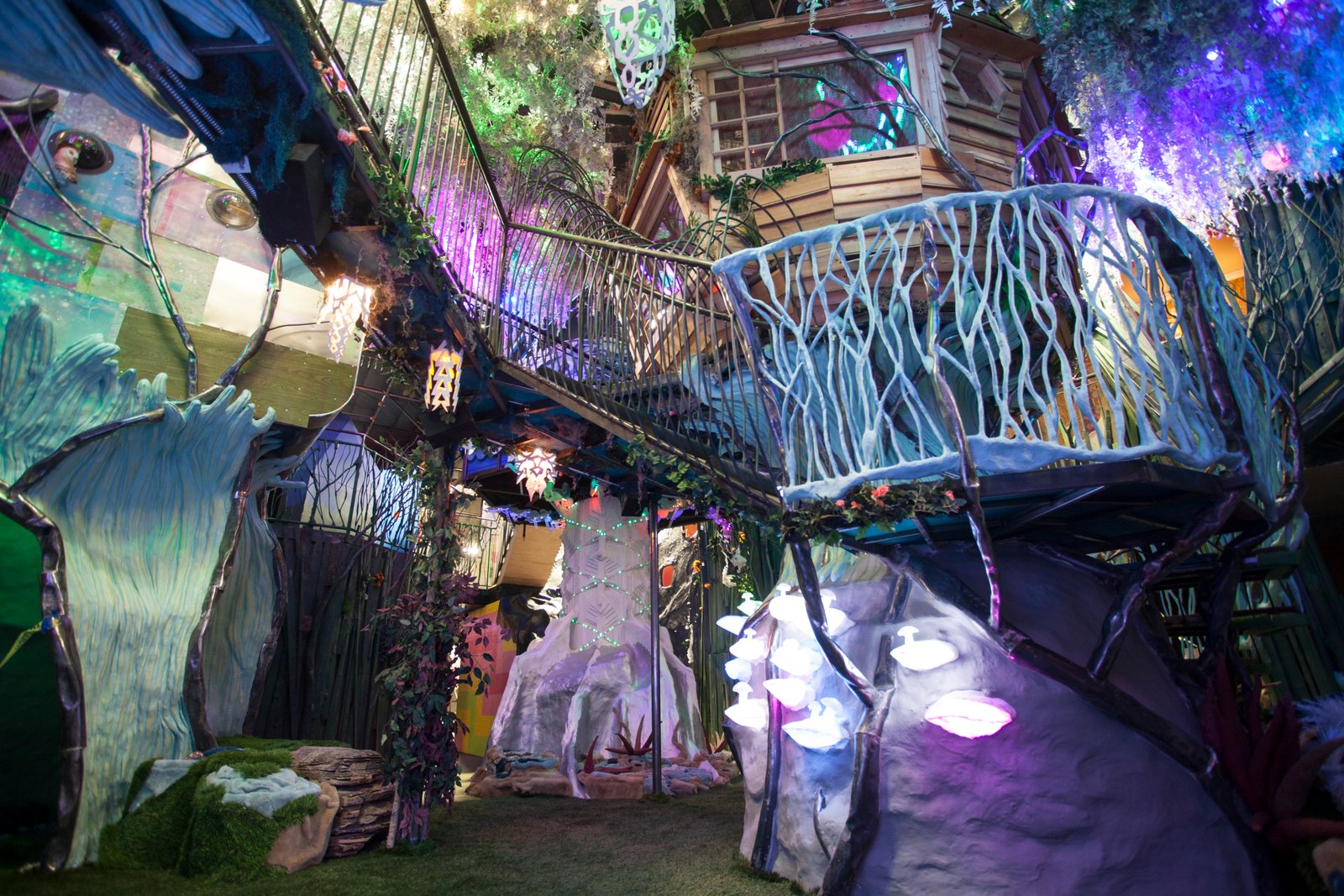
Meow Wolf House of Eternal Return
In this age of income inequality, Meow Wolf seems to be pursuing a new economic model for artists and collectives. What can other artists communities learn from what you’re up to?
I think artists getting comfortable with business-minded people—and business-minded people getting comfortable with artists—is very important. That needs to happen if we want to have the arts and creativity survive in this economic climate. Artists need to apply some business-type thinking to their work.
Art exhibits get a lot of traffic, they’re an event that’s cultural and important and people want to be there. And yet it’s considered totally wrong to charge admission to an art exhibit—that mentality needs to change. I could have four thousand people lined up outside the door to see my paintings, but if no one’s buying them and everyone just wants to be there at the event, then I need to rethink this and consider charging everyone five bucks. Because there’s a valuable exchange happening there.
In addition to a distrust with the business community, in Denver the DIY community has a strong apprehension toward working with city officials. Do you think it’s possible for underground communities to have a good relationship with the city without losing the culture, politics and lifestyle that make them what they are?
I don’t see it as a need to balance to strike, or compromise. What you’re seeing in Denver is an issue with fire codes: An inspection from the city on DIY spaces finds that they’re not up to code and everyone gets kicked out. The honest truth of it is that artists don’t want to live in spaces that aren’t up to code, and the city doesn’t want to kick artists out—so there is some common ground there.
From my perspective, the conversations and progress happening in Denver on this issue are far beyond most any major city in the country. Denver is having the most upfront, honest attempts on both sides to make this situation right.
Rumors have been circulating for some time about a permanent Meow Wolf instillation in Denver. What can you tell us about that?
Denver is at the top of the list of cities that we want to go to. We’re still working it out. We’re trying to find a large piece of real estate where we can do a badass exhibit, and real estate in Denver is complicated and expensive. I think we’ll have a space locked in soon, but there’s a lot of work to do even after that. We’d like to announce something in November.
How can ambitious art projects like Meow Wolf serve as an antidote to all the damage that gentrification has wrought on the Denver arts community?
When money pours in from the tech industry, or marijuana industry, or whatever, artists can’t keep up, they get priced out of their own neighborhoods, and their art spaces get turned into high rise condos.
But it’s not going to be solved by slowing the economic growth of a city. Artists and creative industries need to be able to keep up with the economic growth curves, so that artists aren’t poor. And that’s the problem here: artists don’t have work. The world doesn’t value artists, businesses don’t value artists, and cities don’t value artists.
So our hope [with Meow Wolf] is to show the economic value of artists. And hopefully artists can start to represent themselves in ways that produce value. And new businesses can be developed that are dedicated to supporting creatives. So hopefully artists can start getting bigger paychecks. And with bigger paychecks they can keep up with the economic growth curves of the city.
Author of the psychological horror novel Carnality: Dancing on Red Lake, and regular contributor to VICE and The Guardian, Hesse aims to blend journalism and the arts within the pages of Suspect Press, making it both a reflection of our time and an innovative force of creativity.