Tag: Magazine

  • How to Get Paid: Tools You Can Use Today

    How to Get Paid: Tools You Can Use Today

    By Paul Bindel

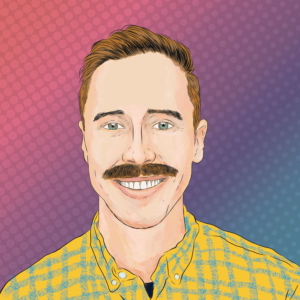
    Paul Bindel Illustration
    Art by Lonnie MF Allen

    For centuries, creative people have often wondered—mostly in their own minds— “Am I really an artist? A writer? A musician? Or merely someone who makes art, writes, or plays music?”

    We can easily settle this debate. You know you’ve really made it if anyone has ever asked you to create for “exposure” or if you’ve ever had a patron ignore your notices about late payment for creative work you’ve already completed. Congrats!

    Is that a sadistic way to define an artist? Only if it weren’t true. As many an artist can attest, tens of thousands of clients, patrons and publishers are ready and willing to undervalue your work. (Cue the #notallpatrons crowd.) It’s so common that Jessica Hische has made a playful infographic, which you can find at shouldiworkforfree.com. Spoiler alert: no, you shouldn’t.

    While there are many aspects to a healthy client/artist relationship—efficiency, scope of work, collaboration, meeting client goals—payment and the agreements around it should remain a top priority. It’s your bottom line. Here are offensive, defensive and preventative tactics to ensure that you take home what you’ve earned.

    Nonfiction writer Scott Carney has seen both tricky and terrible when it comes to publishers. He recently pulled out of a six-figure book deal with Random House when his publishers didn’t respect his creative process. “A lot of freelancers feel like they don’t have any options,” he says. “You have to use whatever tool you can.”

    After publishing several best-selling books and countless magazine articles with Wired, Mother Jones, and Playboy, Carney has developed effective—if sometimes curt—tactics in dealing with clients who pay late, or for less than the agreed-upon price.

    Carney underscores that slighted creatives shouldn’t hesitate to take action. “Always be escalating,” he says. “Many freelancers feel like their relationships with the client is sacred, and if the client is treating them badly, they need to do better in some way and they’ll never have a client again. My take is that if you have a shitty client, you don’t want to work with them. You need to return the energy they give you.”

    When dealing with a late-paying client, the first step is the infamous reminder email: short and dispassionate usually does the trick. When gentle reminders don’t work, however, Carney adds a daily late fee of $100 to the invoice balance to escalate the process. No publication has yet to pay the late fees, but each of them have, finally, paid the invoice.

    To add external pressure, you may consider hiring a lawyer or debt collector. While many creatives might believe that hiring a lawyer is out of reach, sometimes all it takes is a sternly worded letter from an attorney for your clients to take action. Additionally, some lawyers are willing to work on contingency, meaning they won’t be paid until after your case wins. A debt collector may be a suitable choice if a client owes you a large amount, but be aware that they will take a cut.

    Local musician Jesse Mathews remembers negotiating one of his first gigs at The Aggie in Fort Collins. Over a text the promoter had promised “a cut of ALL ticket sales from the concert on top of a small guarantee,” Mathews recalls. This arrangement motivated the band to sell 50 tickets just on their own. When it was time to pay up, the band earned a measly $300—a cut of only the tickets they had sold, not all the tickets. Mathews now knows this arrangement to be a common industry practice, but that didn’t help him then, after the promoter’s texts had led him to believe otherwise. “I had to give my cut plus more out of my pocket to our trombone player,” he says, “and a few bucks each to the rest of my band, who were visibly disappointed after I had been led to hype them up about our profit for the evening.”

    Many stories like Jesse’s start with fuzzy agreements: “I didn’t get it in writing,” “I thought we were friends,” “I understood I would be paid.” While we want to give clients, patrons and publishers the benefit of the doubt, the first step toward clarity is laying out who will do what, by when, and spelling out what happens if any of those fail to happen.

    Painter and owner of Afro Triangle Designs, Adri Norris, swears by Tad Crawford’s “Business and Legal Forms” series. “Ever since getting that book and always making sure to do a contract, I’ve gotten paid every time.” In addition to contracts, Norris uses a range of payment processes—half payment up front, accepting online payments and milestone payments—to build trust and protect her work. Even the final payment may need protective measures, Norris explains. “Especially with products, whether physical or digital, I don’t deliver until I get paid.”

    But what if your defense against the dark arts isn’t strong enough? Even with a contract, my copywriting clients have gotten behind on payments and in one instance, ended our agreement prematurely due to cashflow issues. Not getting paid can feel annoying, infuriating and even hopeless.

    Ultimately, having positive, healthy client relationships requires careful evaluation from the jump. Lincoln Young hasn’t had any significant payment issues in 12+ years as a graphic designer and owner of Swell Creative. He credits that in part to avoiding red flags in the discovery phase.

    For instance, Young is very careful to avoid clients who micromanage: “Clients who allow me to do what I’m good at and, in turn, spend their time doing what they’re good at end up with the best results. And, of course, if their teenage neighbor has ‘insight’, we’re probably not a good match.” Young also uses up-front billing in order to protect himself, and he’s only had late payments a few times in his twelve-year career. “Once I’ve worked with a client for a while and there’s mutual trust,” he says, “we can move into a more regular monthly billing process.”

    Client relationships characterized by mutual respect, understanding and trust take time to build. And walking away from prospective clients who might not be a good fit isn’t always easy—especially if you need to make money quickly. If you’re feeling stuck, remember to account for the total costs of a client relationship—not just a one-time chance to make money. Every client relationship also involves your energy, your time and your emotions, and it’s as important to protect those as it is to bring home a paycheck.


    Originally from rural New Mexico, Paul Bindel spent five years teaching writing before transitioning full time into marketing at Doghead Creative, a digital marketing firm that specializes in content writing, strategy and social media.


  • Business Resources for Creative Entrepreneurs

    Business Resources for Creative Entrepreneurs

    By Paul Bindel

    This image has an empty alt attribute; its file name is Paul-Bindel_portrait-300x300.jpg

    Love or hate resolutions, now is the time most of the Western world pauses to plan and reflect. What will your next step be?
    Whether you need peers to push you deeper into your craft or you want to finally write a business plan, use this list as a springboard for action. Think of the people you know who put off doing that one thing that could take their creative work to the next level. Do you want to be them? Then do your thing!

    Get Inspired & Connected

    Denver Metro has many networking groups and masterminds. What sets the list below apart from your everyday mixer is that each of them feature a skills-based workshop or inspirational talk to help you learn new things-in this case, with other people!

    1 Million Cups,
    Enterprise Coworking, 3000 Lawrence St.

    Each Wednesday morning, entrepreneurs gather and listen to 6-min pitches from the local community. Aside from the ever-flowing coffee, the best part is the 20-min Q&A that follows each pitch.

    Creative Mornings Denver, Location varies
    This monthly caffeine-fueled happy hour features networking and an inspiring speaker, by and for creatives. Grab your tickets early because these free events usually sell out. Be on the lookout for evening happy hours as well.

    Consultants For Good, Location varies
    Part networking, part put-it-into-practice, this monthly a.m. series hosted by Lauren Andraski is essentially a free professional development session for freelancers or business owners with a vision for social change. Do you work for arts nonprofits or social enterprises? This is your jam!

    Ladies, Wine & Design, Location varies
    Once a month, badass women in design gather and connect. This multi-city event, originally started by Jessica Walsh, seeks to increase the number of women who spearhead design agencies, so find your people, whether you work in fashion design, product design, graphic design or architecture.

    Denver Metro Small Business Development Center, 445 Market St.
    If you’ve never been to an SBDC office, now is the time to get over that fear. You already pay for this service through your taxes—why not take advantage of their courses, free consulting and pitch competitions? With an approachable culture and offices next door to the Denver Metro Chamber of Commerce, you can meet or get an introduction to pretty much anyone you need to meet in the local business community.

    RiNoMade Salons
    Converge Denver, 3327 Brighton Blvd.

    The Denver Public Library and RiNo Art District have teamed up for monthly workshops for creative entrepreneurs. Learn how to introduce your business or how to set up a business budget or other lessons they didn’t teach you in school.

    Level Up

    Most of us didn’t get an MBA, so these business and leadership courses could provide essential information so that you can earn more money, find new customers or finally understand a balance sheet. If you feel uncomfortable at the thought of a business course, that might be all the more reason to step towards it. Embracing discomfort is how you grow!

    Rocky Mountain MicroFinance Institute, Re/Launch $150-400 (sliding scale)
    Plenty of businesses have made money without a business plan, but writing one ensures that you understand every part of your business and how to keep it running healthy. This 12-week bootcamp, designed for early stage entrepreneurs, includes one-on-one mentorship and culminates in the option of a microloan to help you grow.

    Denver Metro SBDC, Leading Edge for Entrepreneurs
    $550-695 (scholarships available)

    This 10-week course will help you write a business plan, and it will connect you in a huge way to all of the resources of the Small Business Development Center. (Psst—Arts & Venues offers a 50% scholarship to creative businesses. Also, if you attend an info session, you might even score a discount on tuition!)

    The Commons on Champa, CO. Starters $250
    Testing an idea? Ready to launch? The Commons hosts events every day—many of them free, so take a moment to explore their calendar and pathways. The CO.Starters program is a 9-week program designed to help you grow, but you could also benefit from their two-day Business Bootcamp ($200, scholarships available) or even the Resource Navigator, a free online resource.

    Creative Startups, Accelerator $895
    The business accelerator that launched Meow Wolf also had two Denver alumni in 2018—GoodCinema and Futures United Network (FUN). Everything about this 10-week program is specifically calibrated for artists and creatives. Each cohort kicks off with five days in Albuquerque, NM (lodging and food included) and features a yearlong mentorship program.

    Colorado Business Community for the Arts, Leadership Arts $1,500-2,200 (scholarships available)
    The only Denver Metro leadership academy focused specifically on arts and culture, this 9-month program (Sept-May) promises to equip its 50 participants with the skills they need to serve on nonprofit boards. While it’s easy to balk at the price, you can write tuition off, and the networking aspect of this program could ultimately lead to sales much greater than the fee.


    Originally from rural New Mexico, Paul Bindel spent five years teaching writing before transitioning full time into marketing at Doghead Creative, a digital marketing firm that specializes in content writing, strategy and social media.

  • Human Resources

    Human Resources

    By Eric Raanan Fischman

    Amanda is excited for her demotion. “Things are looking down” she says, smiling. I order more lollipops, and the robot responds. Everything is wearing the Universal Symbol except the employees. We have our own labels and testing: 60% water, 28% plant matter, 12% allowable contaminants. I destroy 4000mg of medicated gummies and mix them up in soil. Customers watch me like an accident.

    “Is this what you want?!” I shout to the 49 cameras above me.

    “Are you Recreational or Medical?” a patient asks. “We’re Metaphorical,” I say. Longhair whistles like the golden flute, Zach is slowly turning into a Key. I take my place on the bridge and reboot my station.

    This whole place runs on wire magic, making oil appear out of thin air, delivering brownies by telegram. Someone returns an empty box that smells suspiciously of grape candies, and we replace it without a thought.

    It’s Monday, which means it’s my Friday. The cameras still think it’s an hour ago, but they won’t show me right now. It’s not our policy to gift each other hugs, but we do so anyway. Even our shoes have SOPs to follow. Lillian’s got one foot on the front desk, one in the inventory. We are all changing faster than the regulations. Like how a few weeks ago Mechele was one person, and in 8 months she’ll be two.

    It’s like, wherever we are we become ourselves. If there’s a soul in me let it break. I’ve been lucky enough, haven’t I? Charity puts our future product into fictional rooms. We have a meeting on Thursday, but I probably won’t be there. It’s Passover and I forgot to put my blood on the doorpost.

    Death calls at 3AM. It’s the bad news I’ve been waiting for.


    Eric Raanan Fischman is an escaped New Yorker and runaway post-orthodox Jew. He teaches at Beyond Academia Free Skool and has had work in South Broadway Ghost Society, Bombay Gin, the Boulder Weekly, and the Punch Drunk Press Anthology. He is the author of Mordy Gets Enlightened, published through The Little Door at Lunamopolis in 2017.


  • Harmony Island

    Harmony Island

    by Elliott Wyatt


    Elliott Wyatt is an illustrator based in Denver and St. Louis. Elliott’s artwork consists of colorful and uncanny organisms dredged from the subconscious, the natural, and the forgotten corners of popular culture. For commissions including band artwork and contributions to personal projects, find them on IG @Dream_centipede.


  • Excerpt from “Tomorrow Forever”

    Excerpt from “Tomorrow Forever”

    by Josh Bayer


    Josh Bayer began his underground comics practice in 1988, appearing in zines and in small shows. since then, his work has appeared in print, video, posters, and exhibitions all over the world. More of his work can be found at joshbayer.com as well as other artists from Tinto Press.


  • Denver Secrets

    Denver Secrets

    as told to Cori Redford


    Photo by Carnefix Photography

    Cori Redford was born several years ago, and still has not lost her faith in humanity. She still thinks dick jokes are funny, and dresses like a toddler. You can probably find stuff she’s done all over the internet with a quick search, and maybe you’ll want to buy one of her t-shirts or zines. She hangs out with a bunch of groovy art kids, who battle with drawings instead of guns or dance like regular gangs. She is cool.


  • An Autopsy of Jason Voorhees’ Injuries

    An Autopsy of Jason Voorhees’ Injuries

    By Jake Fairly and Josiah Hesse


    Jake Fairly oozed forth upon the Denver comics scene from the catacombs of the Rocky Mountain College of Art and Design. Be it comics about Neil Armstrong’s corpse, or generally being metal AF, Jake is a guy with considerably hefty night moves. He’s had work published in periodicals such as Westword and the Denver Public Library’s comics newspaper, and has been labeled a “street artist” by Westword magazine.


    Author of psychological horror novel Carnality: Dancing on Red Lake, and regular contributor to VICE and The Guardian, Hesse aims to blend journalism and the arts within the pages of Suspect Press, making it both a reflection of our time and an innovative force of creativity. He’s recently released the second book in his series, Carnality: Sebastian Phoenix and the Dark Star, available at several Denver booksellers and on the Suspect Press website. Contact: josiah@suspectpress.com, josiahhesse.com & @JosiahMHesse


  • a poem in which the word “fingernails” is replaced by “gender”

    a poem in which the word “fingernails” is replaced by “gender”

    By Nico Wilkinson

    it’s the day before i start testosterone
    and i am buying press-on gender online
    rose gold
    blue crystal
    mirror chrome

    genders that come off easy
    without pulling layers of me away.
    that soften and fall away
    under warm water.
    that you can store away in a box
    for another day. 

    x

    i used to get my gender done
    every month
    but after a lifetime of nervously picking, pulling
    and biting
    my gender grows in too weak
    to stay long. would keep breaking under
    the strain of hard work. dirty gender 
    always edged with soil. the women would scrutinize it
    under the light, would shake their heads and tsk,
    would say i should take better care
    of my gender as they filed, buffed,
    painted a color i would be tired of
    the next day. 

    x

    finally, i’ve found a gender
    i can take off in the half-light
    sitting on the edge of the bed
    smiling at my lover
    a flirtatious suggestion of what 
    these hands can do 


    one hand with gender to raise red lines down her spine. 
    the other with gender to beckon smooth an ebbing tide of breath and muscle 
    without tearing at her soft.

    x

    gender i can put on for a night out to match my dress.
    gender i can remove when i dig in the dirt.
    gender that can pick up a sewing needle.
    gender that can scratch a cat behind the ears. 

    x

    i once knew someone
    who collected slivers of their gender
    in a jar

    the world is littered with the remains
    of the gender that i have pulled apart
    with my teeth. 

    x

    with gender this fragile
    constantly breaking, leaving
    skin raw and red and aching
    i thought about what it would have been like
    to just not have gender at all

    but this world is so full of hard edges
    and this body is so soft
    i can only imagine
    without it, it would eventually hurt
    too much
    to touch anything
    or anyone

    x

    i resent the idea
    of gender that has so often failed me
    persisting when i am dead, growing larger
    while the rest of me
    shrinks away into nothing. 

    perhaps cremation
    could burn my gender away.
    I could be as soft as dirt.
    the hard edges of my gender left
    in the fire.
    anything heavy as gender left behind.

    what would be left of me
    is only what the wind could carry.


    Photo by Kaitlyn Marie Mercy

    Nico Wilkinson is a poet, printmaker, farmer, and organizer based in Colorado Springs. They are the 2017 champion of the Capturing Fire International Queer Poetry Slam and the co-founder of Prickly Pear Printing and the founder of The Quaill Club, a living community for queer artists working toward cooperative sustainability.


  • Collected Selfies From the Puddles

    Collected Selfies From the Puddles

    By Adrian H Molina

    I was at the edge of fall, asking again if we could withstand another icicle winter in the north,
    sitting at the foot of an empty clawfoot tub
    watching the seabirds vanish, 
    a thirty-year time-lapse,
    laughing off your ridicule 
    over my use of the bath. 

    I was swimming in a giant glowing pool
    inside our turquoise studio home,
    shallow aqua blue water
    making up 90% of floor area,
    watching curious tourists come and go
    watching my movements in the water, 
    my teleportations outside 
    picking thorn-stemmed roses by the windows,
    then back again inside playfully paddling like clockwork.
    You returned one day, preoccupied.
    I watched, stunned as you hit a switch 
    permanently tiling the floor where I had swam everyday. 

    I was in the middle of an ocean unknown, 
    overcast and hazy, floating with all the people
    looking at my compass wristwatch 
    watching a small continent drifting north,
    sending a forty foot tidal wave our way.
    I began calculating survival, 
    eyeing a distant rocky shore, 
    searching for you to escape with me.
    I emerged bloody with sea thorns stuck under my feet. 

    I was at the edge of paradise again
    talking to a marvelous blonde ghost about the seabeds, 
    the sepia plains and stone-filled mountains we left,
    overlooking the veracity of white waves
    crashing into mars black rocks,
    spiraling thoughts
    watching aqua swirls curl into shapes unfolding,
    feeling like you didn’t want to take the picture
    we were offered. 

     I woke up one day
    mixing new water colors,
    feeling the burnt orange summer dying 
    another slow beautiful demise, a waning sun 
    turning leaves into fire. 
    I started dreaming new sounds.
    I started cooking new foods.
    I started praising new gods. 
    taking new pictures of the raindrops,
    slowly collecting another ocean.


    Adrian H Molina is a wordsmith, time traveler, and shapeshifter, first cousin to jaguars and quetzals native to the “Americas.” He can be spotted in the portals of your imagination. He was recently featured at the Crestone Poetry Festival. He eats money in exchange for creative ideas. Everything is made up, and he knows his worth. Molina is creating new worlds. You can follow his writings and musings within the matrix on IG @MolinaWrites.


  • Fall/2019 Letters To The Editor

    Fall/2019 Letters To The Editor

    Previous Issue: #23


    I am terrified of puppies, can you help me? Whenever I see their fluffy tails wagging, those maniacal eyes wide as they strain against the leash, desperate to sink their sharp-as-glass teeth into my shoelaces, I nearly faint with terror. Ever since that afternoon when I was a boy, when my brother covered me in peanut butter and unleashed three litters of eight week old St Bernards on me, trampling my young body with their furry frames, eighteen tiny tongues feverishly licking me up and down, I’ve been unable to see puppies as anything other than bloodthirsty monsters, not unlike the Alien facehugger or rabid piranhas. I actually like older dogs. Cats, too. And I adore squirrels. Though I’ve recently started dating someone with a new puppy and want to be free of this affliction. Suspect Press, can you help me?

    Sincerely,
    Pilgrim Billy

    .One Carnality
    of release the to forward Looking .welcomed is predicament this with dealing on advice Any .imagined originally I as linear as isn’t this of all maybe that ,moving forward feel things some that noticed have I .everything much pretty dreading I’m but ,say to have I ,though 2016 to forward looking am I .terrifying is It .reverse in time through moving now am I that afraid am I and reality of perception my warped completely has it that ,fact in impactful So .me on impactful very was Press Suspect of issue last The

    ,Editors Dear

    Dear Editors,

    This is the ghost of David Foster Wallace*, and I wanted to talk to you a bit about the experience of being a ghost*. Being a ghost has reminded me that our experiences are less determined by our search for objectivity*, and more so by our personal, active relationship with the world.

    *Author of Infinite Jest**

    *The idea of writing about objectivity is kind of an absurd premise in and of itself, as to make a concrete statement in written form, possibly never to be edited, is in itself to deny the ideas of objectivity.

    *By ghost*** I do not so much mean a spooky entity in a white sheet, as much as the lingering presence of what once was.

    **If you’ve not heard of Infinite Jest, just ask any white dude at a coffee shop about it. They’d love to tell you about how good the first third of it is, and how they are planning to finish reading it after they get through Chuck Klosterman.

    ***To be a ghost feels as if to be an extra in a movie that no one ever sees. A box of cereal hidden in the back of the freezer section**** of the grocery store, where we all fail to truly connect with the people around us.

    ****Freezers and refrigeration were built and sold by General Electric, as a freezer runs 24/7 and uses a substantial amount of electricity to run, thus creating a new industry for profit for GE.

    I’d love to hear your opinions on the subject.

    Thank you*,
    David Foster Wallace

    *By you, I mean the objective you, though that may be tainted by time, by experience, or by any number of unseen factors that I am not at liberty to have influence over, especially because I am in fact, a ghost now.

    This image has an empty alt attribute; its file name is Pan-letters-divider-1.png

    Dear Editors,

    Excellent choice bringing Brice Maiurro on as your Poetry Editor. He is an incredible and humble man and pretty much the coolest person I have ever met. He is just wonderful. I would sincerely consider submitting odes on how much I love Brice Maiurro to your magazine. He is a real gem. Did I say he’s the coolest person? He is the coolest person. Super good choice. A plus.

    Sincerely,
    Not Brice Maiurro

    This image has an empty alt attribute; its file name is Pan-letters-divider-1.png

    Dear Editors,

    I was excited to see your story last issue on Rhinoceropolis because finally! The coverage that rhinoceros deserve. They are such beautiful creatures that move with such grace and poise, elegantly splashing around in mud pits and grunting majestically like the dainty, delicate brutes they are. So you can imagine my dismay when I tore open the magazine only to discover that the story in fact had nothing to do with the kings of the floodplains but rather dove into a story of a kitschy, crust-punk warehouse that I assume is filled with skaters ditching school to graffiti some boards. Do what you do best, and stick to animal coverage.

    Sincerely,
    Ryan O. Ceras

    This image has an empty alt attribute; its file name is Pan-letters-divider-1.png


  • Hello, Father Ernie

    Hello, Father Ernie

    By Josiah Hesse

    [dropcap]F[/dropcap]ather Ernie was gasping his last breaths when the faces of the children he’d abused appeared before him. It’d been decades since anyone called him “Father,” but that was the way these children addressed him.

    “Hello, Father Ernie.” 

    “Hello, Father Ernie.” 

    “Hello, Father Ernie,” they said, one after the other, each sounding more confident and empowered than the last. Very different from the shy and trembling children he’d once known. That was so many decades ago, yet Father Ernie instantly recognized every face as they materialized in the darkness, attached to the small bodies he’d vampirically drank from, night after night, seemingly free of consequence. 

    Until tonight. 

    He’d moved into this isolated cabin outside Leadville, Colorado two months earlier as a ninety-two-year old retired preacher with stage IV bone cancer and a suffocating bout of pneumonia. Ernie’s grandson (the last living relative willing to speak with him) had been caring for him the last couple years, but after moving Ernie into this cabin, he’d been checking in on his grandfather less and less. Ernie hadn’t seen a soul for eight days when the children showed up. 

    He’d stopped chemotherapy when moving into the cabin, and there was a brief respite when his chemo side-effects stopped before his cancer symptoms returned. But when dehydration, diaper rash, and excessive lung fluid took hold, Ernie decided to just finish his OxyContin script all at once and have done with it. 

    Tsunamis of euphoria had been washing over him for the last ten minutes, but they were now interrupted by the most fundamental terror Ernie had ever experienced. A blizzard raged outside his cabin window, the sound of a wolf howling into a moonless night filled his ears when the first boy appeared. 

    “Hello, Father Ernie,” said the boy. 

    Paul McCormick, Ernie thought, recognizing the tattered clothes and shaggy hair of the first boy he’d made a move on. It was only once, he told himself. 

    And then, as if in response to this thought, another child walked into the room. 

    Like the boy, she appeared in a blue haze, fuzzy around the edges, but still very recognizable. Maria Chary, he recalled, her family were Haitian refugees. 

    Gales of snow tapped at the cabin window. 

    The girl’s eyes settled on Ernie’s, and he felt a deep shudder ripple through his body. He was helpless, unable to move or look away, as Maria’s gaze filled him with despair. She was wearing a yellow Sunday dress with tall white socks and polished shoes. It was the same outfit she wore to every church service for five years, long after her growing body caused the seams to stretch and snap.

    “I set the template for you, Ernie,” the girl said to her former priest, sounding much older than she appeared. “Poor, a bit dim, and parents who aren’t trusted by people of authority.” 

    Ernie nodded, drool spilling out the corner of his weakened mouth, recalling the formula he’d devised with Maria. He’d driven her out to a cabin not unlike this one, was given access to this child for three days and two nights, merely because he’d asked. 

    He’d been allowed a three decade run at this sort of behavior before the Vatican, burdened with more six figure payouts for Ernie than any other 20th century priest (each of them settled out of court), took the rare step of defrocking him for the crime of pedophilia. Characteristically, though, they never admitted to any wrongdoing, and so Ernie’s reputation remained unscathed as he worked his way through several evangelical churches throughout the seventies and eighties. This was the era of the Jesus Freaks, former hippies who ran drug rehab communes with the aim of cultivating born again converts. Most pertinent to Ernie was their taking in junkie parents who could no longer care for their children, separating families and placing the kids in orphanages with no parental contact. Healthcare, education, and religious instruction was given to these kids, free of charge, and was administered by just about anyone willing to volunteer. Ernie was always the first to raise his hand for the privilege.  

    Miraculously, it wasn’t until 1998 that Ernie got his first ass-beating. 

    He’d lived until his final days without any legal repercussions for his actions (which was not uncommon for clergy with evil hands), but there were a lot of ass-beatings, mostly from parents or siblings in a blind rage, unable to afford a lawyer but perfectly capable of violence. 

    Yet none of this curbed Ernie’s appetite, as evidenced by the growing number of children surrounding his deathbed years later. There were so many that the room seemed to stretch to accommodate them. He could see generations of different clothes and haircuts, illustrating the breadth of time he’d been terrorizing children. The years had passed so gracefully, he’d never done the math of how many there’d been. Many of them were filthy, mentally or physically disabled—ideal candidates for a predator.  

    When each child penetrated the ether and walked into the room, their eyes would lock onto Ernie’s, and his body seemed to gain twenty pounds, sinking deeper into his bed with the weight of guilt—a sensation he’d never experienced in all his life.  

    Altogether, they appeared so much stronger than they did as confused, silent children in the dark. He was desperate to run, or at the very least look away; wordlessly, each child transferred the emotional burden of Ernie’s touch back onto him. All of the shame, terror, and intimate disgust was lifted from them, and gracelessly flung into Ernie. The ache of self-loathing, the panic attacks of feeling violated, the helplessness of another taking agency over your own body, suddenly rushed into Ernie, dozens of times over, shifting his sociopathic being into that of a spongy empath—and thereby burning his soul alive.

    “No, PLEASE! No more,” Ernie pleaded, but the children kept coming, appearing in the windows, in the paintings on the wall, across his hands and feet. They surrounded his bed, growing to inhuman heights, towering over Ernie as he gasped for breath, choking on his own fear. 

    Then the crowd parted, silence filled the cabin, and at the foot of Ernie’s bed appeared a child different from the others. Instead of a fuzzy blue, this child was colored red. But beyond this, Ernie knew the real difference between this boy and the others: This boy was himself, 85 years ago. The hazel eyes reflected into his own, and for the first time in his life, Ernie began to weep. 

    “Look!” he shouted at the other children. “I was once a child too! An innocent! The pain I caused you was only an echo of what I absorbed as a child. Take pity on me, please!” 

    But the child version of himself remained silent, staring into Ernie’s eyes, offering no reprieve from the emotional horror inflicted on him. As seven-year-old Ernie approached his dying self, the dread rumbling in his stomach increased. The boy’s eyes turned to fire, and the bed grew bright and hot. As his bowels evacuated and lungs failed to breathe, Ernie tried to crawl away from his former self, feeling a maddening horror violently clash around his head, like a rabid bird in a cage. Young Ernie climbed onto the bed, approaching the old man on his hands and knees. 

    Flames climbed the cabin walls, filling the room with blinding waves of heat.  

    “You killed me long before you touched any of them,” the boy told the old man. “You suffocated me for years, deaf to my screams, killing us both, again and again, your entire life. . . . Now, be deaf no more.” 

    Father Ernie became lost in the gaze of his former self, feeling his own eyes turn to fire like the boy’s. He felt them boiling in their sockets, then explode across his face, instantly melting his skin down to the skull. 

    Even though he couldn’t see, Ernie could still somehow sense the children around him. He could sense their transformation into spritely demons, their mouths, hands and feet mutating into instruments of torture. Flames consumed the room as the children climbed onto the bed, nipping, burning and crushing his extremities. Yet even this physical torment was eclipsed by the soul-shattering emotional pain radiating through him, the empathetic misery of facing down his crimes against children. 

    “We will never leave you, Father Ernie,” they said in unison. 

    “Say goodbye, Father Ernie.” 

    “Say goodbye, Father Ernie.”  

    “Say goodbye, Father Ernie,” they chanted, as the bed slowly sank into the floor. 


    Author of psychological horror novel Carnality: Dancing on Red Lake, and regular contributor to VICE and The Guardian, Hesse aims to blend journalism and the arts within the pages of Suspect Press, making it both a reflection of our time and an innovative force of creativity. He’s recently released the second book in his series, Carnality: Sebastian Phoenix and the Dark Star, available at several Denver booksellers and on the Suspect Press website. Contact: josiah@suspectpress.com, josiahhesse.com & @JosiahMHesse


  • How Do Artists Develop New Products and Services?

    How Do Artists Develop New Products and Services?

    By Paul Bindel

    [dropcap]I[/dropcap]n 2010, at the height of the recession, when a friend admitted to considering grad school for  literature, I begged him to turn around. Of course, I’d nerded out on Emily Dickinson and African postcolonial lit on my own degree a few years earlier, but I was left more indebted than inspired and wound up hustling at a coffee roaster and homeless shelter to pay the bills.

    Six months later, between coffee bean deliveries, my coworker Chloe found out I could write and walked straight up to the owner: “Did you know this guy has a fucking English degree?” The one thing I was most embarrassed of, my professional chagrin, ended up leading to a raise and my first writing project: a barista training manual.

    While I didn’t become a full-time technical writer, I did get better at translating skills from one context to another. I had to learn how to see all the skills I’d already developed as valuable and build from there.

    Most creatives understand the challenge of pivoting and repackaging. Your chosen medium may be oil landscapes or three-act plays, but how do you distribute—and make money on—your work right now? And if your medium is term limited (like dance) or site dependant (like installation art), how do you develop other revenue streams? I spoke to three artists who created new paths for themselves along their way to finding creative (and economic) fulfillment.  

    If you’ve ever felt bittersweet fuzzies before the Robin Williams mural on 14th Ave, or taken a shameless selfie at a “Love This City” mural in RiNo, Golden Triangle or the Arts District on Santa Fe, you’ve seen SoGnar Creative Division’s colorful work. Today, their clients include Denver Zoo, Denver Public Schools, the Broncos, Budweiser and many towns across Colorado. Their journey to large-scale murals, however, was far from direct.

    SoGnar’s founder Pat Milbery was a pro snowboarder, so his company took the best parts of that culture—music, gnar and art. Their submarine logo spoke to an underground aesthetic and DIY ethos: “We were communicating tons of guerilla marketing: stickers, wheatpasting and a lot of propaganda. For the first handful of years, very little of what we did was done with permission.”

    Milbery’s athletic success inspired a snowboarding camp for kids and multiple collaborations with sports and marketing companies, effortlessly shuttling from designs and prints to in-store and experiential installations.

    To switch to full-time art, though, Milbery had to leave the sport behind. “As much as I loved what I was doing, I saw a bigger calling. I was scared because it was a shift in image. If we pulled out of the [snowboarding] market, would people still have our back?” (Spoiler alert: they did.)

    Denver artist Kaitlin Ziesmer, whose work straddles the line between illustration and fine art, never expected to be designing merchandise—but now buttons, pins, books and stickers are part of her regular monthly income.

    “I started making products so that my friends could afford my work,” Ziesmer says, “I was surprised that I really enjoy designing packaging. From a practical standpoint, the better the packaging, the better it would sell. It makes creating the work that much easier, less dependent on selling originals. Selling originals is awesome, but you can’t rely on it.”

    Now that Ziesmer’s work is available in eight different Denver stores, she can finally afford a studio, which has boosted her art production. Recently, she began creating sculpture and even murals, including a PBR-sponsored polar bear on Colfax Ave.  

    If you’re looking to break into the retail world, Ziesmer explains, most stores will either offer consignment—paying you monthly or quarterly when your work sells—or wholesale: paying you in a lump sum. Be sure to ask how often you’ll get paid and how much you’ll make (splits can range from 50/50 to 70/30, with the store taking more for overhead). Ziesmer says her biggest lifesaver has been a spreadsheet that tracks her payments. If a store owner forgets to send a check, her spreadsheet reminds her to send a gentle reminder. Finally, you’ll need to know if the store will be tracking inventory, or if you’ll need to come by and refill it yourself. Before a big art project comes up, Ziesmer calls her vendors to see if they’re well-stocked, so she can put her full attention on her art.   

    At the same time, the risk of others exploiting your innovation is real. This happened to Ethan Bach from Alt Ethos, an experiential design company: “We developed an interactive mirror for live events, but this year, three to four similar products came out that claim to do it better.” His solution? Double down on what makes your offering unique. For Alt Ethos, customer service and sustainability give them an advantage over other creative companies.   

    Your path to new, lucrative avenues for your art may not be clear immediately. Some of Ziesmer’s items sell better at one store than another; sometimes they don’t sell at all. It takes time and persistence to launch something new. “You gotta be passionate about it, you gotta give it all you got, and you can’t see any obstacles,” says Bach.  

    Milbery clarifies that when developing new services or products, purpose always trumps profit: “If you’re going to venture into a new place, do it 110%, but don’t have huge expectations or assumptions about financial gain. I go into new projects with a purpose of what we’re accomplishing and how this can create an impact.”


    Fund Your Art: Residencies & Fellowships

    Some creative careers offer a narrow path through the woods (lucky you, architects!), but for composers, new media artists, entrepreneurs and the rest of us, it’s often half bushwacking, half stumbling into fields of opportunity. One respite from this choose-your-own adventure are residencies and fellowships.  

    Many artists crave these structured spaces to grow and experiment. Fellowships offer a stipend for work you have done or will do, while residencies typically provide you space to work, or work and live. You might also have access to specialized tools or mentorship.

    Spots may be competitive, but don’t let that keep you from applying. In fact, psych yourself up right now—you’re 100% worthy of developing your skills, and you deserve to invest in yourself.   

    In the event you’re not accepted, consider designing your own residency by asking friends and family for a space to retreat and work. Remember that the endgame is spending dedicated time on your craft—not just a line on your resume. Even a weeklong sabbatical can benefit your art.

    Music

    Residency, The Music District
    If music is a business, this is the business gym for musicians to work out at. For less mixed metaphors, contact Julie@themusicdistrict.org.

    Artist in Residence, Nocturne Jazz & Supper Club
    Get instant feedback on your jazz licks (for better or worse) from live audiences during your weekly performances in this 4–8 week residence.  

    Visual Arts

    Artist in Residency, Anderson Ranch, $750 or $1,500 fee
    Who doesn’t love a mountain resort? Spend five weeks in spring, or ten weeks in fall honing your medium in Snowmass Village. Apply by Feb 15.

    Film

    Fellowship, The Outdoor Film Fellowship
    Like a good reality TV show, this experience brings a team of students and recent grads together for a month to create a high-impact film.

    Commitment Grants + Emerging Filmmaker Fellowship, MountainFilm, $1,000-5,000 award
    Telluride’s iconic documentary film fest makes a ton of money; each year, they pay it forward to emerging filmmakers’ new projects.

    Writing

    Writing in Color Fellowship, Lighthouse Writers, Free classes
    This yearlong program prepares one writer of color to publish their first manuscript. Application due in the spring.

    Fort Lyon Fellowships, Lighthouse Writers, $2,500 stipend
    For four weeks, work on a writing project while teaching creative writing classes to homeless veterans (~10 hours/week). Applications open in the fall.  

    Performing Arts

    Guest Artist Presenting, Control Group Productions
    You can dance. You can jive. Have the time of your life developing a new production. Apps due in February.

    Multidisciplinary (visual, performing, etc.)

    Creative in Residence, Denver Art Museum, $7,500 stipend
    Who hasn’t dreamed of taking over at least a corner of the museum? If you know how to inspire collaboration and visitor engagement, apply in the fall for this April–September gig.

    The Residency Program, Elsewhere Studios, $600-850 fee/month
    Literally any artist or creative person (“scientists, teachers, and other creative thinkers”) can apply for this year-round Paonia residency. What’s holding you back?

    Artist in Residency, Platteforum, $250/week + studio space
    Be the weird creative mentor that inspires high school students to take risks! This 6-8 week studio residency culminates in an exhibition in your medium.

    Artist Residency, Redline Contemporary Art Center
    Two years. A dedicated studio. It doesn’t get any more Denver than this Five Points, community-centered space. Applications open in March 2020.

    *Don’t see a good match in our list? There are hundreds more to search from in the Alliance of Artists Communities’ database.


    Originally from rural New Mexico, Paul Bindel spent five years teaching writing before transitioning full time into marketing at Doghead Creative, a digital marketing firm that specializes in content writing, strategy and social media.