Tag: Interview

  • “People Hating You Can Be Energizing,” Says Westword’s Patricia Calhoun

    “People Hating You Can Be Energizing,” Says Westword’s Patricia Calhoun

    By Amanda E.K.


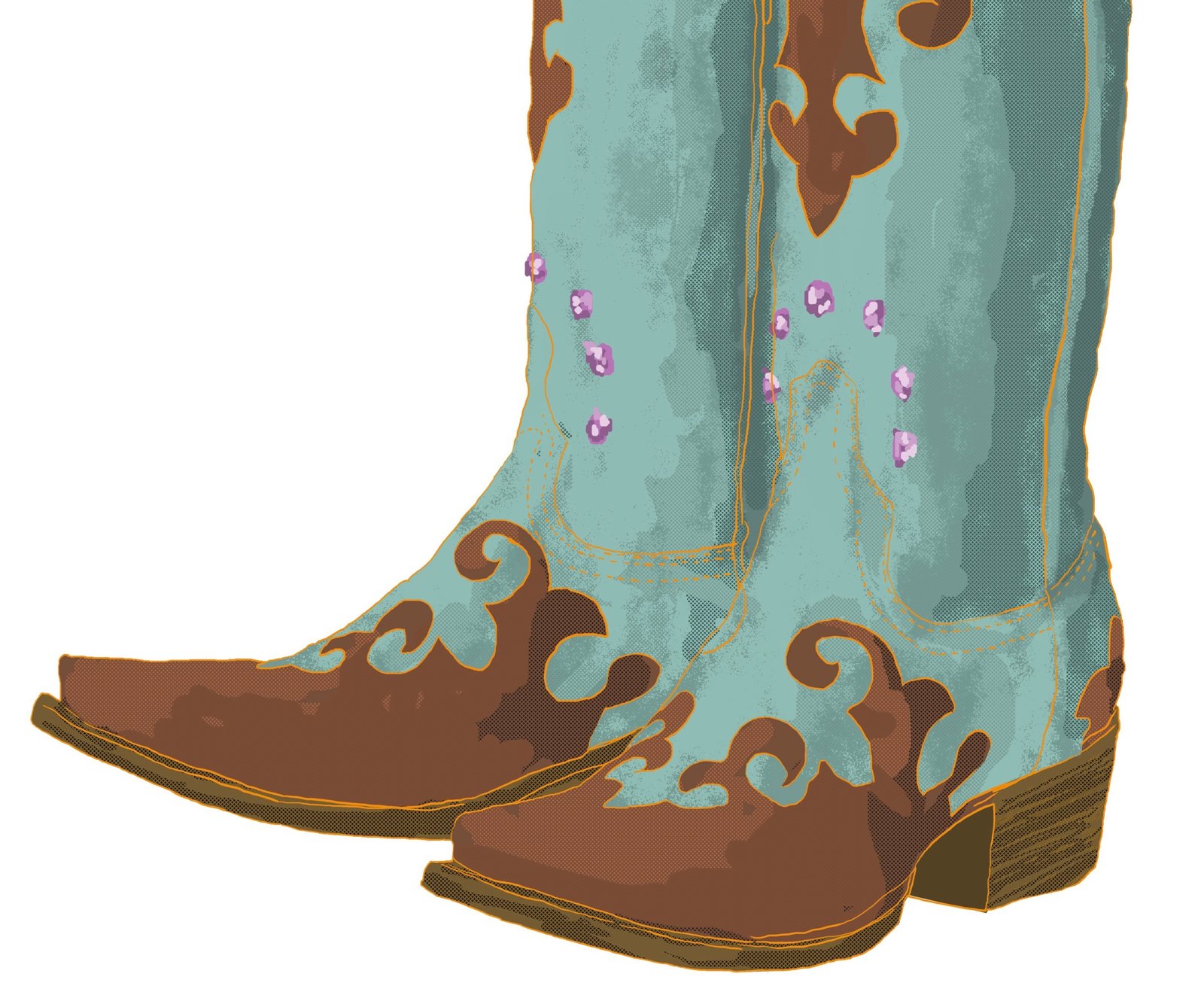
    Illustration by Lonnie MF Allen

    I sat down with Patricia Calhoun, co-founder of Westword and longtime editor, to talk about the Denver arts & literature scene, and to solicit some advice on managing a team of creatives.

    She greeted me at the Westword offices, her purse slung over her shoulder, ready to go out for a beer. My first impression: This lady’s got style. I took note of what she refers to as her ‘Granny Clampett gets a BeDazzler’ ensemble, complete with cowgirl boots and denim skirt, and thought: This is going to be fun.


    You’re known for working around the clock with Westword. How do you spend your downtime?

    Some friends and I just bought a crazy tower outside Lymon. It’s the World’s Wonderview Tower in Genoa, Colorado. It’s a 90-year-old tourist attraction that was falling down, so we bought it to save it, but we don’t know quite how we’re going to do that.

    Do you ever get caught up in fantasy, or are you mostly realistic and analytical?

    I think reality is much more interesting than anything coming out of my brain. Much more important than imagination is the ability to be surprised. You have to be willing to give up everything you thought going into a story because it might be very different. You’ve got to listen for nuance, look for detail, make connections, especially if you’re doing news and investigative reporting.

    Any addictions that get you through the day?

    Drinking is a time-honored tradition, especially in newspapers. When you go to a bar, you meet people who aren’t in your everyday life, and you find stories you wouldn’t find otherwise. Also, if you’re having a difficult conversation with someone it’s a lot easier to do it over a beer. I don’t like to drink alone, which might be why I’m not alone that often.

    I read too much, if that’s a vice. I read everything I can get my hands on. I love the fact that neighborhood papers and niche publications still seem to be doing pretty well compared to daily papers, which are dying right and left.

    What’s your take on the Denver underground magazines like Birdy, Barf, Cherry and Suspect Press?

    Really it’s similar to what it’s been over the last forty years. There’ve been a lot of zines and independent art publications; they don’t necessarily last that long, music ones especially, but I love it when people are trying to do it. But it’s hard to make a living at. You have to love what you’re doing.

    Do you see any of the art scenes in Denver expanding outside the state?

    It’s really cyclical. Sometimes bands are hitting it big, like Nathaniel Rateliff. You’ll have times when comedy is really strong. A lot of it depends on who’s running a venue. The writing area’s boomed a lot because of publications like Birdy and Suspect Press and Lighthouse Writers Workshop. But the book pub industry is so tough. You’ve got to have a strong writer’s community just so you can have people to commiserate with. I think the bigger change right now is people who think they can’t afford to stay in Denver, so they’re not necessarily moving to make it bigger, but just to survive and still be able to do their art, and that’s a depressing development.

    Have you had to make changes at Westword to evolve with an ever-changing Denver?

    The changes in Westword have a lot less to do with Denver itself than the media in general. Westword is one of a group of papers that evolved in the seventies called alternative papers, so we took that name because we weren’t the daily mainstream press, but now, most of the mainstream press is gone, or they’ve changed so much…What are we an alternative to now? A very tiny Denver Post? So now we’re really just a local media outlet.

    What advice would you give a new editor in chief?

    Absolutely be as clear as you can with people about why a story works or why it doesn’t. But the other thing is, always give yourself enough time to sleep on it, or at least walk around the block because, especially when you’re doing creative things, with a little time and distance the solution will float into your head. Also, get ready for everyone to lie to you and make up the most creative excuses for missing a deadline. I’ve heard about more sick cats—even from people with cats I know died months earlier.

    How do you justify pissing someone off in order to stand by what you think is best?

    As an editor, you’re working for the story, and the reader, so you want the story to be the best it can be. At Westword we’re either disappointing or hurting people, or making them mad because we’re telling stories they might not want told, because they’re true. It might be the easy thing to not run that story, but it wouldn’t be the right thing to do.

    People hating you can be energizing. Sometimes the haters are right. If we make mistakes and people call us on it, more power to them. I love when readers care enough to even say that.

    One of our editors—and a former writer for Westword—asked me to ask you: What was it like dating James Eckhouse, the guy who played Jim Walsh on 90210?

    He and I both played the violin, so we shared a stand in junior high, and both completely faked what we were supposed to be playing because neither of us ever practiced. It’s funny when one of your early boyfriends is not the hunk on Beverly Hills 90210—he’s the dad.



    Amanda is a short fiction and freelance writer originally from Iowa. She’s a member of the Knife Brothers writing group – a small collective of short fiction writers – who can be found occasionally haunting the Victorian halls of Lighthouse Writers Workshop. You can find her work in Suspect Press, Birdy, Jersey Devil Press, and forthcoming in the Punch Drunk Press Anthology.
  • Interview: Talking Economics with Meow Wolf

    Interview: Talking Economics with Meow Wolf

    By Josiah Hesse


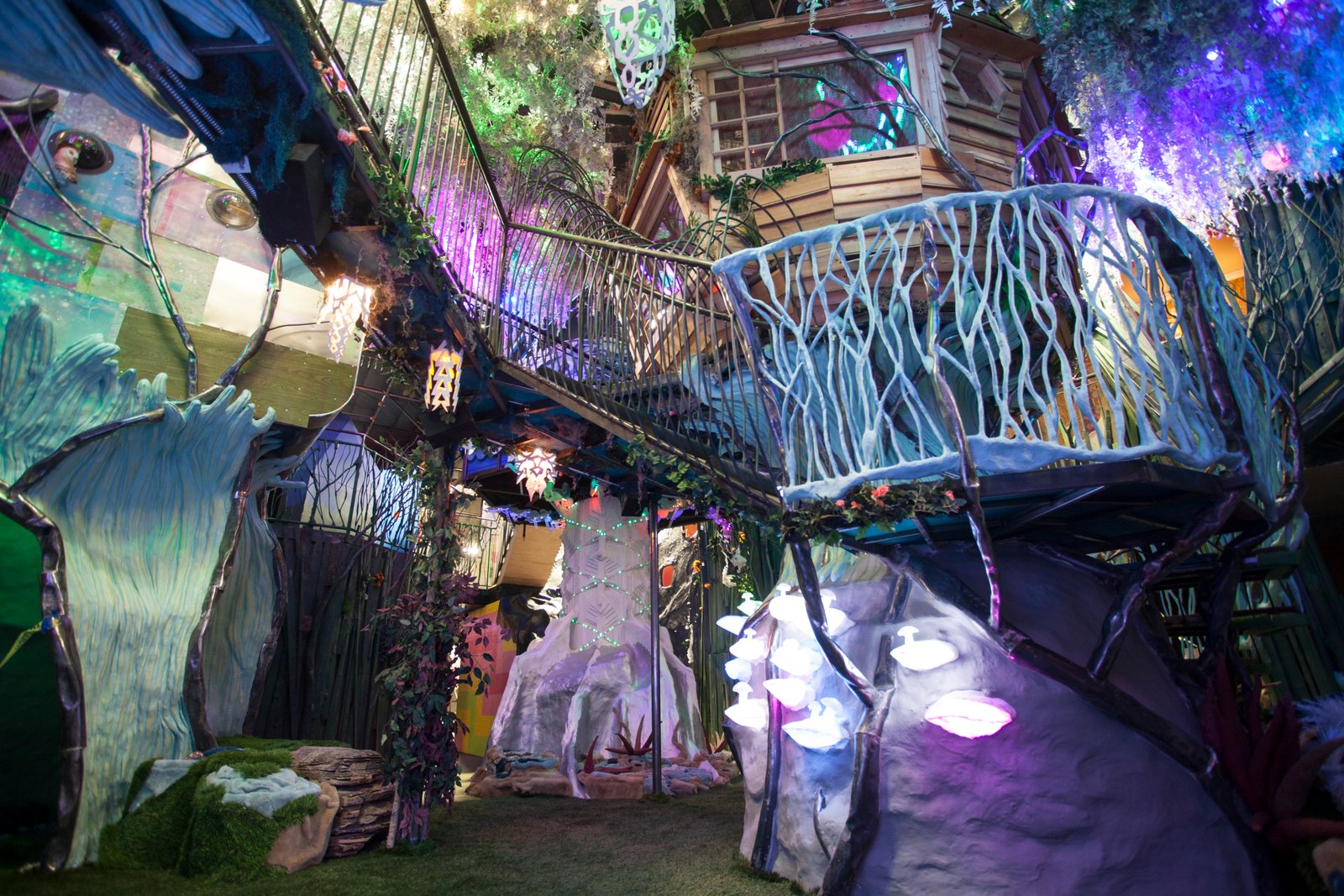
    Meow Wolf House of Eternal Return


    There is an old cliche that “real” artists aren’t interested in making money. Or that if you are focused on making money, you must be a shit artist. Sometimes things do play out that way, leading to great talents being ripped off, and hacks making a killing on hotel room art. But it doesn’t have to be that way, says Vince Kadlubek, co-founder and CEO of the Santa Fe, New Mexico art collective Meow Wolf.

    Since its inception in 2008 as an underground music and arts venue, Meow Wolf has set a new standard for what artists can accomplish when they pool their resources and aren’t afraid of  playing a little footsie with capitalism. In 2016 the collective landed their first permanent space—a converted bowling alley owned by Game Of Thrones author George RR Martin—and there created the world-renowned exhibit, House of Eternal Return, which has hosted more than 400,000 visitors in less than two years.

    Kadlubek has had no qualms about monetizing the popularity of Meow Wolf, and in turn his organization has been turning some of that capital into grants for various organizations, not least of all Denver’s DIY arts community, who received a total $74,000 in the form of 20 different grants just this year.

    We recently spoke with Kadlubek about Meow Wolf’s upcoming plans for a Denver location,  what our arts community can learn about the success they’ve had in Santa Fe, and why getting along with business and government doesn’t have to kill your creativity.

    For those that don’t know, what is Meow Wolf?

    Meow Wolf is a creative company that grew out of an art collective. Our main product, the thing we like to create the most, are immersive exhibitions. We’ve done around 30 temporary exhibits, but we have a permanent one in Santa Fe.

    But we’re also in entertainment media, AR, VR stuff. We’re looking to do feature films, documentaries, merchandising, product development, whatever. Our aim is to keep the spirit of the artist collective alive and open to whatever people are passionate about.

    How much of Meow Wolf is an extension of Santa Fe and the arts culture down there?

    It’s kind of based on Santa Fe in that it’s a psychedelic, weird, cyber-spiritual, culty, new age kinda thing. There’s a lot of Santa Fe influence on Meow Wolf, but there’s also a lot of national aesthetics we’re pulling from. We’re just doing what we’re doing.

    Meow Wolf House of Eternal Return

    In this age of income inequality, Meow Wolf seems to be pursuing a new economic model for artists and collectives. What can other artists communities learn from what you’re up to?

    I think artists getting comfortable with business-minded people—and business-minded people getting comfortable with artists—is very important. That needs to happen if we want to have the arts and creativity survive in this economic climate. Artists need to apply some business-type thinking to their work.

    Art exhibits get a lot of traffic, they’re an event that’s cultural and important and people want to be there. And yet it’s considered totally wrong to charge admission to an art exhibit—that mentality needs to change. I could have four thousand people lined up outside the door to see my paintings, but if no one’s buying them and everyone just wants to be there at the event, then I need to rethink this and consider charging everyone five bucks. Because there’s a valuable exchange happening there.

    In addition to a distrust with the business community, in Denver the DIY community has a strong apprehension toward working with city officials. Do you think it’s possible for underground communities to have a good relationship with the city without losing the culture, politics and lifestyle that make them what they are?

    I don’t see it as a need to balance to strike, or compromise. What you’re seeing in Denver is an issue with fire codes: An inspection from the city on DIY spaces finds that they’re not up to code and everyone gets kicked out. The honest truth of it is that artists don’t want to live in spaces that aren’t up to code, and the city doesn’t want to kick artists out—so there is some common ground there.

    From my perspective, the conversations and progress happening in Denver on this issue are far beyond most any major city in the country. Denver is having the most upfront, honest attempts on both sides to make this situation right.

    Rumors have been circulating for some time about a permanent Meow Wolf instillation in Denver. What can you tell us about that?

    Denver is at the top of the list of cities that we want to go to. We’re still working it out. We’re trying to find a large piece of real estate where we can do a badass exhibit, and real estate in Denver is complicated and expensive. I think we’ll have a space locked in soon, but there’s a lot of work to do even after that. We’d like to announce something in November.

    How can ambitious art projects like Meow Wolf serve as an antidote to all the damage that gentrification has wrought on the Denver arts community?

    When money pours in from the tech industry, or marijuana industry, or whatever, artists can’t keep up, they get priced out of their own neighborhoods, and their art spaces get turned into high rise condos.

    But it’s not going to be solved by slowing the economic growth of a city. Artists and creative industries need to be able to keep up with the economic growth curves, so that artists aren’t poor. And that’s the problem here: artists don’t have work. The world doesn’t value artists, businesses don’t value artists, and cities don’t value artists.

    So our hope [with Meow Wolf] is to show the economic value of artists. And hopefully artists can start to represent themselves in ways that produce value. And new businesses can be developed that are dedicated to supporting creatives. So hopefully artists can start getting bigger paychecks. And with bigger paychecks they can keep up with the economic growth curves of the city.  


    Author of the psychological horror novel Carnality: Dancing on Red Lake, and regular contributor to VICE and The Guardian, Hesse aims to blend journalism and the arts within the pages of Suspect Press, making it both a reflection of our time and an innovative force of creativity.