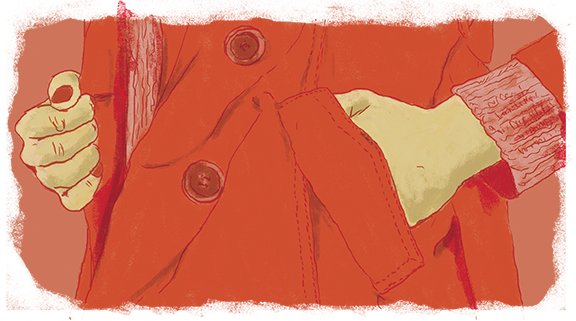
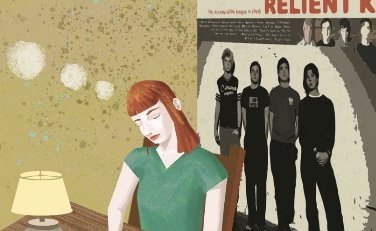
In Christian college, I founded a monthly event called Single Girls Sleepovers. We’d dress up in old prom dresses and plastic costume jewelry, listen to Disney tunes, and color in coloring books while watching a romantic comedy. We were great at having “safe” fun, but the real point of these sleepovers was to spend time in discussion and prayer for our future husbands. (Assuming we were all to be married, and to men.) We’d sit in a circle and talk about our ideal guys, dissolving into giggles when describing body types. Then we’d blast “A Whole New World” and write our imaginary grooms a letter. We believed in God’s plan, and we were saving ourselves for the men God had already chosen for us. All we had to do was prepare our hearts for the union through prayer and contrition, and when we were finally ready, God would let us meet The One. We read books called When God Writes Your Love Story, The Bride Wore White, and I Kissed Dating Goodbye. I think it was one of these books, or maybe Brio Magazine (a lifestyle and entertainment mag for teen Christian girls) that sparked the husband-letter trend. The letters included promises to pray for this unknown boy’s purity and to remain pure for him (though you were unclear where the line was drawn for self-gratification). You let him know your interests, and how close your walk with God was. (“How’s your walk been?” you might add as a postscript.) The letters were never sent, but collected and saved to present to your husband on your wedding night. I still have all of these letters. No longer to share, but to keep a record of how I’ve changed. Here is the first of those letters:
Amanda is a short fiction and freelance writer originally from Iowa. She’s a member of the Knife Brothers writing group – a small collective of short fiction writers – who can be found occasionally haunting the Victorian halls of Lighthouse Writers Workshop. You can find her work in Suspect Press, Birdy Magazine, Jersey Devil Press, and in the Punch Drunk Press Poetry anthology.
Award-winning cartoonist Karl Christian Krumpholz’s work has appeared in many different publications and even a documentary. He is currently working on two weekly comics: The Denver Bootleg, which examines local musical history for Denver’s Westword, and 30 Miles of Crazy! – the true-ish tales of the various lives in the city. Karl is always looking for a better place to get a drink. His latest comic, An Introduction to Alcohol, compiles a storyline originally featured in 30 Miles of Crazy! and won Best in Show at the 2017 Denver Comic and Arts Expo (DINK). Karl can always be found at karlchristiankrumpholz.com
Meow Wolf is a Santa Fe, New Mexico based arts and entertainment group that established in 2008 as an art collective. The company is composed of nearly 200 artists across all disciplines including architecture, sculpture, painting, photography and video production, virtual and augmented reality, music and audio engineering, narrative writing, costuming and performance, and more. Basically everything. Meow Wolf is in the process of expanding to other cities, including Denver as their next stop.
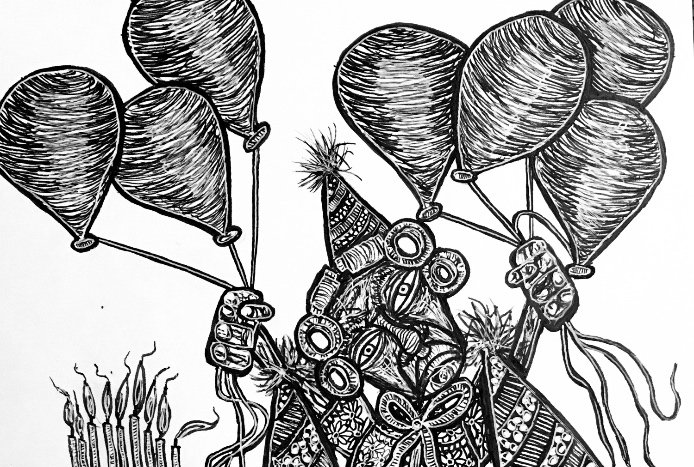
Everyone is waiting for the guest of honor.
The birthday party at the senior center
is turning into a round table argument about medications
and sit and be fit exercises.
Stretched secrets of survival pontificated by near centenarians.
Exchanging advice on how to have an extra birthday.
Always move it or lose it.
Put a tobacco dip can next to the toilet.
Drink a home brewed tonic made out of crushed daisy stems and cheap beer.
A chorus of cane clicks
the hum from walker legs wearing tennis balls sliding across linoleum.
The party’s brought out all the residents’ best wigs, muumuus and tracksuit tuxedoes.
Everyone’s excited to have a slice of the sugar free cake.
It’s not a party until Girdy takes out her teeth.
Alice and Linda tell stories about when they were arrested for wearing pants.
Shrinking high school sports legends named Norman and Jed knee slap
about days before baseball gloves and football helmets.
Any and every tale about war. Plural.
Dust bowls.
Radio stories.
Black and white television.
Playing checkers on porches to the drone of cicada songs.
Holding up the walls at Saturday night dances.
Cider sipping on hayrides to nowhere for no reason.
The birthday girl used to be a beauty queen.
Maud’s window faces the street,
She is watching traffic pass her time
wearing the crown and sash
and almost as much makeup
as the the night she won Miss Quad Cities.
Charly Fasano is a poet, performer, filmmaker and block printer, as well as a Westword-voted Colorado Creative. Fasano has read his poems with and shared the stage with bands like Lucero, Drag the River, Crime in Stereo, Madson Jones, Land Lines and The Queers. He is the founder of Fast Geek Press, Pretend You Can Reab audio zine, and As Well As Magazine. Fasano’s poems have appeared in Yellow Rake, Lubricated Magazine, Syntax Magazine, MovingPoems.com and Growing Strange Magazine. His book of poems, Next Analog Broadcast (2011) was published by Sunnyoutside Press, and was followed by a multimedia book and 7 inch called RETROSPECT/ED featuring the music of Lucero, released on Fast Geek Press in 2014.
I sat down with Patricia Calhoun, co-founder of Westword and longtime editor, to talk about the Denver arts & literature scene, and to solicit some advice on managing a team of creatives.
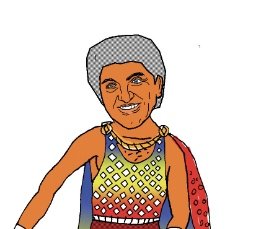
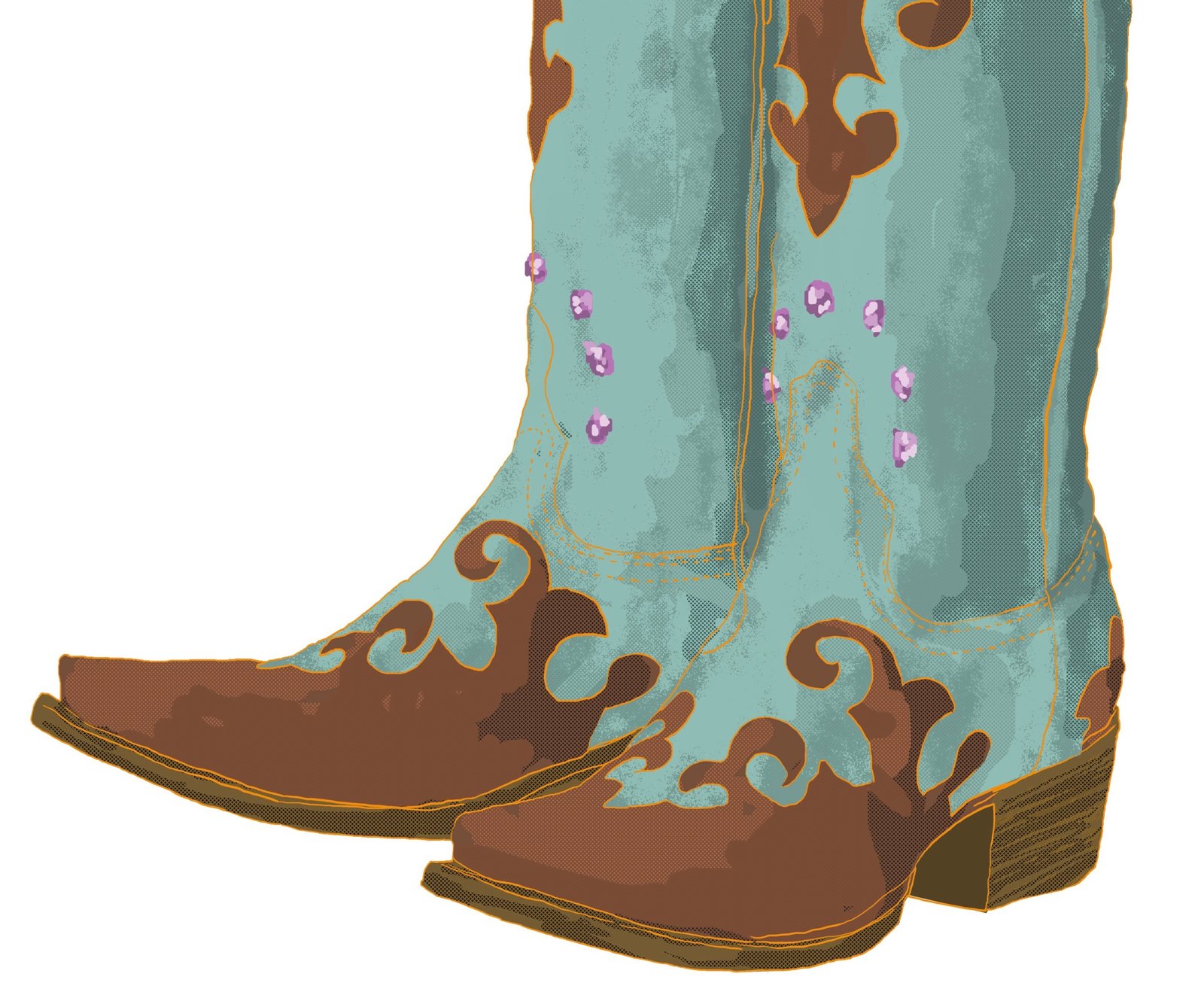
She greeted me at the Westword offices, her purse slung over her shoulder, ready to go out for a beer. My first impression: This lady’s got style. I took note of what she refers to as her ‘Granny Clampett gets a BeDazzler’ ensemble, complete with cowgirl boots and denim skirt, and thought: This is going to be fun.
You’re known for working around the clock with Westword. How do you spend your downtime?
Some friends and I just bought a crazy tower outside Lymon. It’s the World’s Wonderview Tower in Genoa, Colorado. It’s a 90-year-old tourist attraction that was falling down, so we bought it to save it, but we don’t know quite how we’re going to do that.
Do you ever get caught up in fantasy, or are you mostly realistic and analytical?
I think reality is much more interesting than anything coming out of my brain. Much more important than imagination is the ability to be surprised. You have to be willing to give up everything you thought going into a story because it might be very different. You’ve got to listen for nuance, look for detail, make connections, especially if you’re doing news and investigative reporting.
Any addictions that get you through the day?
Drinking is a time-honored tradition, especially in newspapers. When you go to a bar, you meet people who aren’t in your everyday life, and you find stories you wouldn’t find otherwise. Also, if you’re having a difficult conversation with someone it’s a lot easier to do it over a beer. I don’t like to drink alone, which might be why I’m not alone that often.
I read too much, if that’s a vice. I read everything I can get my hands on. I love the fact that neighborhood papers and niche publications still seem to be doing pretty well compared to daily papers, which are dying right and left.
What’s your take on the Denver underground magazines like Birdy, Barf, Cherry and Suspect Press?
Really it’s similar to what it’s been over the last forty years. There’ve been a lot of zines and independent art publications; they don’t necessarily last that long, music ones especially, but I love it when people are trying to do it. But it’s hard to make a living at. You have to love what you’re doing.
Do you see any of the art scenes in Denver expanding outside the state?
It’s really cyclical. Sometimes bands are hitting it big, like Nathaniel Rateliff. You’ll have times when comedy is really strong. A lot of it depends on who’s running a venue. The writing area’s boomed a lot because of publications like Birdy and Suspect Press and Lighthouse Writers Workshop. But the book pub industry is so tough. You’ve got to have a strong writer’s community just so you can have people to commiserate with. I think the bigger change right now is people who think they can’t afford to stay in Denver, so they’re not necessarily moving to make it bigger, but just to survive and still be able to do their art, and that’s a depressing development.
Have you had to make changes at Westword to evolve with an ever-changing Denver?
The changes in Westword have a lot less to do with Denver itself than the media in general. Westword is one of a group of papers that evolved in the seventies called alternative papers, so we took that name because we weren’t the daily mainstream press, but now, most of the mainstream press is gone, or they’ve changed so much…What are we an alternative to now? A very tiny Denver Post? So now we’re really just a local media outlet.
What advice would you give a new editor in chief?
Absolutely be as clear as you can with people about why a story works or why it doesn’t. But the other thing is, always give yourself enough time to sleep on it, or at least walk around the block because, especially when you’re doing creative things, with a little time and distance the solution will float into your head. Also, get ready for everyone to lie to you and make up the most creative excuses for missing a deadline. I’ve heard about more sick cats—even from people with cats I know died months earlier.
How do you justify pissing someone off in order to stand by what you think is best?
As an editor, you’re working for the story, and the reader, so you want the story to be the best it can be. At Westword we’re either disappointing or hurting people, or making them mad because we’re telling stories they might not want told, because they’re true. It might be the easy thing to not run that story, but it wouldn’t be the right thing to do.
People hating you can be energizing. Sometimes the haters are right. If we make mistakes and people call us on it, more power to them. I love when readers care enough to even say that.
One of our editors—and a former writer for Westword—asked me to ask you: What was it like dating James Eckhouse, the guy who played Jim Walsh on 90210?
He and I both played the violin, so we shared a stand in junior high, and both completely faked what we were supposed to be playing because neither of us ever practiced. It’s funny when one of your early boyfriends is not the hunk on Beverly Hills 90210—he’s the dad.
Amanda is a short fiction and freelance writer originally from Iowa. She’s a member of the Knife Brothers writing group – a small collective of short fiction writers – who can be found occasionally haunting the Victorian halls of Lighthouse Writers Workshop. You can find her work in Suspect Press, Birdy, Jersey Devil Press, and forthcoming in the Punch Drunk Press Anthology.
Charly Fasano is a poet, performer, filmmaker and block printer, as well as a Westword-voted Colorado Creative. Fasano has read his poems with and shared the stage with bands like Lucero, Drag the River, Crime in Stereo, Madson Jones, Land Lines and The Queers. He is the founder of Fast Geek Press, Pretend You Can Reab audio zine, and As Well As Magazine. Fasano’s poems have appeared in Yellow Rake, Lubricated Magazine, Syntax Magazine, MovingPoems.com and Growing Strange Magazine. His book of poems, Next Analog Broadcast (2011) was published by Sunnyoutside Press, and was followed by a multimedia book and 7 inch called RETROSPECT/ED featuring the music of Lucero, released on Fast Geek Press in 2014.
Prompt given by Josiah Hesse: Watching your entire record collection burn in a fire
Now that the dogs have made it to a safe place and all the humans have been accounted for, there isn’t much else to do. I think about pulling out my phone and capturing the fire on video, but what would I do with the footage? I don’t want to post it on social media with a “myhouseisonfire” hashtag. I can’t stand it when people litter their pages with sympathy-soliciting shock posts. I’m also trying not to document every single thing that happens to me, since I remember a time when people didn’t have video cameras in their pockets. And for whatever reason, I don’t trust that overwhelming urge to utilize my smartphone every time something somewhat unique takes place. I can’t say exactly what’s wrong with going through life like that, but it just doesn’t feel like it’s a very healthy way to live.
So I keep my phone in my pocket as I walk around to the side of the house to where a window had broken. I feel a pang in my stomach when I see my entire record collection burning at the other end of the living room. It’s quite the sight to behold, since I have over 1,200 LPs and another three to four hundred singles. With that collection, I’ve made thousands upon thousands of dollars DJing throughout the years. I also painstakingly tracked down every record I loved as a kid, and replaced all my tapes and CDs with the LP version. I have almost every record I ever wanted. It’s a collection twenty-two years in the making.
I shake my head as the realizations pile up: I’m not going to be able to DJ again. I’m not going to be able to sit on my couch with a stack of zines as the sweet punk songs turn at 33 and ⅓ RPM on my turntable. I’m not going to be able to rebuild the collection at the reasonable 1990s price of $8 an LP. And I’m not going to get to organize my records autobiographically like Rob in High Fidelity — a task I had always been meaning to accomplish.
But I don’t cry. I don’t bemoan my fate. I just stare. And as soon as I stop dwelling on the consequences of my burning records, two epiphanies grip my thoughts: (1) The smoke from all that plastic can’t be good for the environment. And (2) I’m going to have to get the young IT guy at my job to teach me how Spotify works.
Brian Polk has contributed to The Onion A.V. Club,Westword, and birdy, and began publishing his zine The Yellow Rake in 2004, which has released 30 issues over its existence. In 2014, he co-founded Suspect Press, a quarterly literary publication that celebrated ten issues under his leadership. Since 2009, he has played drums in the band Joy Subtraction, which released its second album Hate Will Keep Us Together on Denver’s Sailor Records. More recently, he started another band, Simulators. Follow him on twitter @brianpolk1234. For more information on Placement of Character, go to brianpolk.org.
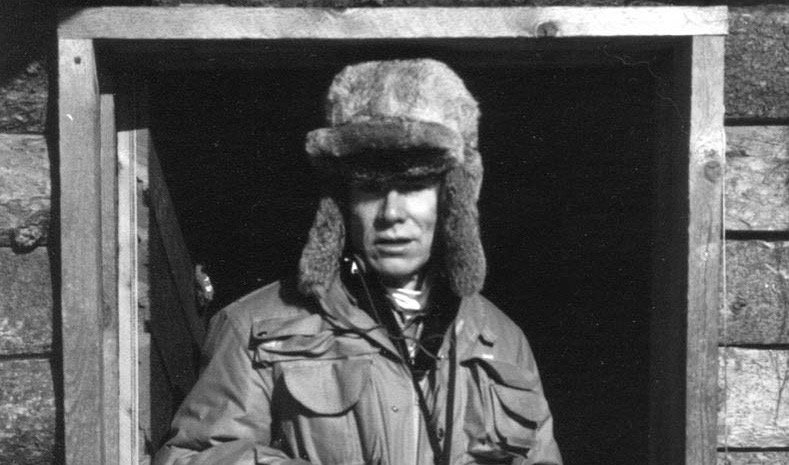
Andy Warhol Mountain Man, Aspen Colorado 1982 by Mark Sink
Mark is a co-founder of The Museum of Contemporary Art Denver and founder of the Month of Photography Denver and The Big Picture street art projects. His personal fine art photography is shown and collected worldwide alongside some of the most influential photographers in history, including Ansel Adams and Irving Penn. In the 1980s, he spent time documenting the lives and work of noted artists such as Andy Warhol, Jean Michel Basquiat and Rene Ricard. Find more of his work at www.gallerysink.com.
*This story was written with the prompt ‘My Hand Remembers’ as part of a series with the local Knife Brothers writing group
$$$
Your impractical satin sheets were the first sign—or should’ve been—that you were never exclusive. It’s not that you hid your reputation, I just couldn’t see past you and me, so I pretended I was your sole interest, or at least that I would become so.
You stroke my hair until I fall asleep and make me breakfast in the mornings. I know I’m sharing you but I want you every day.
I chase you tirelessly in my dreams, where you hide in crooked shadows. The theme is recurring but my strategy is never the same.
Sometimes I hate that I’m like this. Never satisfied, always searching.
$
I’ve stolen from every job I’ve ever had. Twenty-dollar bills from cookie jars. A gold chain from a jewelry store. Books and food and recipes. I’m in possession of a moral dilemma.
$
I like the men who look for that certain something they can’t live without. A grace they’ve been in search of for years. Those elusive Audrey Hepburns of the world. Though I think it’s likely they enjoy the chase more than the catch. I think it’s likely I do, too.
$
“It can wait,” you said over dinner our first night out. “What can wait?” “Sleeping together. If you think we should get to know each other better before all that.” “I appreciate you saying so, but I’m not interested in waiting.” “All right then,” you said and took a bite of chicken. You chewed fast, with a bit of a smirk, then swallowed and said, “I knew I was irresistible.” I smirked back. “Not to mention smug as fuck.”
$
We met when I’d been recently hurt by an unfaithful partner. Maybe I thought I had something to prove—that I could play the other role—and you at least were aware of my reasons for wanting to be with you. But more than that I liked you, and the intent way you listened to every word. I could tell you anything, which equally thrilled and scared me.
$
The first thing I stole was a shiny pencil from the bedroom of a friend. It changed colors in the sunlight—sometimes silver, sometimes red depending on its angle. I hid it in my pocket when my friend went downstairs for juice. I was all sweat and nerves waiting for her to return. Her desk was a mess—a Lisa Frank explosion—and I figured she’d never notice. I felt a touch of guilt, but I also loved the rush of stealing, the high of taking something that belonged to someone else, and was surprised at how easy it could be done. What did this say about me? Did I lack excitement, or attention? Was I a product of the Devil who always watched me, waiting for me to slip? I figured I’d ask God for forgiveness to absolve what I had done. The pencil stayed in my drawer for years, unsharpened. Now and then I’d take it out and twirl it, debating whether to return it to my friend or keep it for myself. But I waited too long and eventually threw it out when I moved to college. There’s something rewarding about taking stock of one’s possessions. I wish I would’ve learned to apply this to relationships.
$
“How many women have you been with?” I asked you after our fourth date. “At what number will you not want to see me anymore?” “That many, huh? I guess I’ll take my chances.” “Good. Because I really like spending time with you.” “Good. I do, too.”
$
We fucked on every surface of my apartment, but at your place kept to the bedroom to avoid the cat. For this reason I may never own a pet. Their constant shedding highlights my stagnation. During our off weekends I wandered the city taking photos to sell to magazines. Freelancing never earned me enough to get by, and to fill in the gaps I shelved books at the public library, where I made friends with an eight-year-old named Elsie. I noticed her when the Magic Tree House series began to steadily deplete. I never told her I knew it was her, just kept recommending books I liked at her age. In high school my best friend stole Kerouac and Burroughs out from under the librarian’s bespectacled nose. His justification was that he’d share the books instead of leaving them unknown and hidden on the shelf. I only took things that passed under the radar. Overstocked and unnoticed. Even when told, “Help yourself,” I only helped myself in secret so I could get away with more. If it was food, I consumed the evidence. If it was money, I spent it quickly. Whether cheap or costly, the objects in my hand all carried a similar weight: Control. As a child I had low self-esteem. I fed off secrets that no one in my small town could discover—that no one in my small household would take note of.
$
“Have you ever stolen from a lover?” you asked one night, after I told you about my secret compulsion. I said no because I still didn’t know how many women you’d been with. Also, because it was true that I hadn’t. “What’s the biggest thing you’ve stolen?” you asked. “As in size, or cost?” “Whichever’s the most significant to you.” I thought about it while straddling your hips, running my hands over your arms and chest. Our deepest conversations happened while in bed. “My grandmother’s buttons,” I answered. “What makes them so special?” you asked. “They’re antiques, for one. But it’s because I took them after she died, at a time when my grandfather went into rages over the slightest misplacement of her things. I was worried I’d lose his trust if he ever found me out.” “Then why take the risk?” you asked. “I’d had my eye on them for years. My grandmother would sit, buttons splayed over her coffee table, and tell me the history of each hand-painted piece. They were small enough to keep with me all the time—tied on a string around my neck as a reminder that the things that last the longest are those that we keep hidden.” “And do you still have them?” “Yes. But when my grandpa died they lost some of their meaning.”
$
I think the real reason my grandmother’s buttons were my biggest steal is that they were the only one that didn’t have a practical purpose. It’s not like I used the buttons to repair a shirt. Even the gold chain I stole was a way of saving money on a gift.
$
Two months into our relationship I asked who else you were seeing. I asked it flippantly, wanting to play it cool about our arrangement. I liked you enough to want it to work, though I had my doubts that I could manage it long term. You said not to worry, that your sleeping with other people didn’t affect how you felt about me. I think that must’ve been the second (or third…or eighth) sign that I’d never have you as my own. They say we don’t look for the things we don’t want to see. And sometimes we hide what we’re afraid will make someone lose interest. I was naive enough to take the risk. Once I’d told you about my habit I was worried you’d see right through me—unveil my subconscious need to possess you. That you’d toss me away like I did my friend’s pencil, my purpose served for your fleeting gratification. I wonder: is it possible to steal what I really want, and still want you in the end? But if I don’t try to steal you, will I get you at all? Call it karma, or comeuppance. But I think that I’ve earned you.
Amanda is a short fiction writer and educator originally from Iowa. She’s a member of the Knife Brothers writing group – a small collective of short fiction writers – who can be found occasionally haunting the Victorian halls of Lighthouse Writers Workshop. You can find her work in Suspect Press, Birdy, and Jersey Devil Press.

















 Mark is a co-founder of The Museum of Contemporary Art Denver and founder of the Month of Photography Denver and The Big Picture street art projects. His personal fine art photography is shown and collected worldwide alongside some of the most influential photographers in history, including Ansel Adams and Irving Penn. In the 1980s, he spent time documenting the lives and work of noted artists such as Andy Warhol, Jean Michel Basquiat and Rene Ricard. Find more of his work at www.gallerysink.com.


 Artist, musician, owner of Parallel Lines Framing, and founder and president of Disguise Club!